

What Does Constructive Possession of Drugs Mean in Florida?
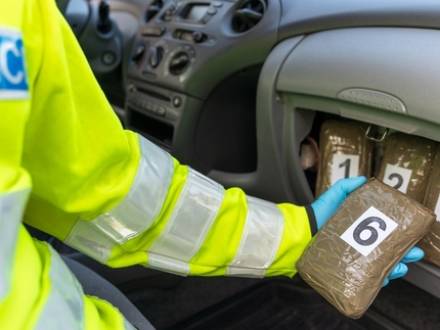 "Constructive possession" means you can face drug charges in Florida even if the drugs were not found on you personally. Under Florida Statute § 893.13, prosecutors can file charges if they believe you knowingly controlled a controlled substance found somewhere else, such as a vehicle or shared home.
These cases are often more complicated than they seem. Simply being near drugs does not mean you possess them. Instead, prosecutors must use other evidence to connect the drugs to a specific person.
If you are facing drug charges, understanding constructive possession can help you protect your rights and know when to contact a Miami, FL drug possession defense lawyer.
What's the Difference Between Actual and Constructive Possession?
Florida law recognizes both actual possession and constructive possession.
"Actual possession" means the drugs are on you or within your reach. For example, drugs found in your pocket, your hand, or a bag you are carrying may be considered actual possession.
"Constructive possession" means the drugs are not on you but are found somewhere prosecutors believe you controlled. This could include a center console in your car, a bedroom, a backpack, or another place prosecutors believe is yours or that you have control over. Many people are surprised to learn they can face criminal charges even when the drugs were not found directly on them.
What Does the State of Florida Have to Prove for Constructive Possession?
Constructive possession cases often depend on circumstantial evidence instead of direct evidence. Prosecutors must prove more than the fact that you were near the drugs.
To obtain a conviction, the state typically must show that:
- You knew the drugs were present.
- You knew the substance was an illegal controlled substance.
- You had the ability to exercise control over the drugs.
These requirements are important because constructive possession is different from actual possession. Prosecutors cannot rely only on the fact that you were nearby. They must present evidence that connects you to the drugs. These elements can be harder to prove when several people had access to the same place.
For example, if drugs are found in a shared apartment or a car with several passengers, prosecutors must still connect the drugs to you to convict you. Simply being in the same place as the drugs is generally not enough to establish constructive possession.
When Can Someone in Florida Be Charged With Constructive Possession?
Constructive possession charges happen in many everyday situations in Miami. For example, you could be arrested after police find drugs:
- In the center console or glove compartment of a vehicle.
- Inside a shared apartment or condominium.
- In a borrowed backpack or suitcase.
- In a hotel room occupied by more than one person.
More than one person can sometimes be arrested when drugs are found in a shared space, such as a car or apartment. However, that does not mean everyone will be convicted. Prosecutors still have to prove that each person knew the drugs were there and exercised control over them.
Even if the police do arrest you, an arrest does not mean prosecutors can prove the charge beyond a reasonable doubt. Who controlled the drugs, who had access to them, and whether you knew the drugs were there can all affect the outcome of your case.
What Should You Do if You're Facing Constructive Possession Charges in Miami?
If you have been accused of constructive possession, an experienced criminal defense attorney can review the evidence and explain your legal options.
Your defense may include showing that you did not know the drugs were there, that other people had access to the area, or that prosecutors can’t prove you controlled the drugs.
A constructive possession charge does not automatically lead to a conviction, but it should always be taken seriously. The sooner you speak with an attorney, the sooner you can begin protecting your rights and building your defense.
Contact a Miami, FL Drug Crimes Lawyer Today
If you are facing a drug charge, you deserve clear answers about your options. Attorney Julian Stroleny is a former Assistant State Attorney in Miami-Dade County and grew up in Coconut Grove. His firm is available 24/7 and has nearly 400 five-star reviews. Contact the Miami, FL drug crimes lawyer at Stroleny Law: Criminal Defense Attorney for a free consultation, or call 305-615-1285 today.
Contact Us
Connect with Us and Take the First Step Toward Justice
To get the legal help you need in your criminal case, reach out to our firm today. We will provide you with a free consultation where our attorney will review your case and advise you of your legal options.
66 W Flagler St., Suite 1005
Miami, FL 33130
P 305-615-1285

Please fill out the form below or call 305-615-1285 to contact us.



From our Miami office, Stroleny Law: Criminal Defense Attorney serves clients across the city, including Allapattah, Brickell, Coconut Grove, Coral Way, the Design District, Downtown Miami, Edgewater, Liberty City, Little Haiti, Little Havana, Overtown, the Upper East Side (MiMo District), and Wynwood. Our reach also extends throughout Miami-Dade County, representing clients in Aventura, Coral Gables, Doral, El Portal, Florida City, Hialeah, Homestead, Key Biscayne, Miami Gardens, Miami Springs, North Miami, North Miami Beach, Opa-locka, Pinecrest, South Miami, Sunny Isles Beach, Sweetwater, and West Miami.
Results listed are not a guarantee or indication of future case results.
© 2026 Stroleny Law: Criminal Defense Attorney
66 W Flagler St., Suite 1005, Miami, FL 33130
305-615-1285