

How Does Florida's Stand Your Ground Defense Work in 2026?
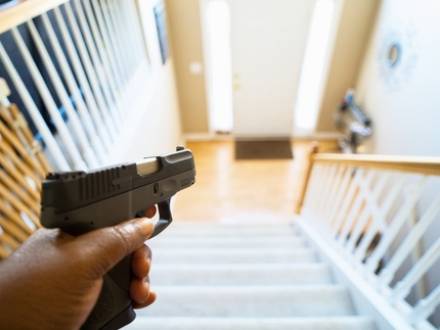 Florida's Stand Your Ground law gives people the right to use force, including deadly force, to defend themselves without retreating first. A 2023 Pew Research Center survey found that 72 percent of gun owners cite protection as a major reason they own a gun, yet many people who act in self-defense still end up facing serious criminal charges for a violent crime. Whether Stand Your Ground applies depends on the specific facts, and the legal process that follows an arrest has several steps that can determine whether your case ever reaches a jury.
If you are facing charges in 2026, a Miami, FL, criminal defense attorney can review your case and advise you on whether the Stand Your Ground defense applies.
What Does Florida's Stand Your Ground Law Cover?
Florida Statute § 776.012 allows a person to use or threaten force, including deadly force, to prevent death or great bodily harm to themselves or another person, or to stop a forcible felony. There is no duty to retreat first.
Under Florida law, forcible felonies include crimes such as robbery, carjacking, burglary, aggravated assault, and sexual battery. If you reasonably believed deadly force was needed to stop one of these crimes from happening right away, that can support a Stand Your Ground claim.
Stand Your Ground can apply anywhere a person has a legal right to be, provided the person is not engaged in criminal activity. The standard for the Stand Your Ground law is not whether you were actually in danger, but whether a reasonable person in your position would have believed they were.
When Does Stand Your Ground Not Protect You in Florida?
Florida Statute § 776.041 limits when the Stand Your Ground defense is available.
Stand Your Ground does not apply in these situations:
- You provoked the confrontation, unless you clearly withdrew and the other person continued to attack.
- You were committing, trying to commit, or fleeing after a forcible felony.
- You used force against a law enforcement officer carrying out their duties.
Courts look closely at who started the confrontation, and prior threats, text messages, witness statements, and video footage all factor into how a judge views the claim. Cases involving people who knew each other tend to draw more scrutiny, since prosecutors will argue the defendant had other options.
How Does Stand Your Ground Immunity Hearing Work in Florida?
Stand Your Ground is not just a defense you raise at the trial. Under Florida Statute § 776.032, before a case ever goes to a jury, your attorney can file a motion asking the judge to dismiss the charges on Stand Your Ground grounds.
At this hearing, once the defense raises a basic Stand Your Ground claim, the prosecution must prove by clear and convincing evidence that the use of force was not legally justified. This standard is higher than what prosecutors need at most pretrial hearings, but it is still lower than the beyond-a-reasonable-doubt standard used at trial.
At the hearing itself, both sides present evidence to the judge. This can include witness testimony, surveillance footage, medical records, and law enforcement reports. The judge serves as the fact-finder, meaning there is no jury. Hearings can range from a single day to several days, depending on the complexity of the facts.
If the judge agrees that your actions were justified, the case is dismissed. If the judge denies the motion, the case moves forward to trial. You can still argue self-defense to the jury, but the pretrial immunity protection no longer applies.
Does Stand Your Ground Protect You from a Civil Lawsuit in Florida?
Under Florida Statute § 776.032, a person who is granted immunity from criminal prosecution under the Stand Your Ground law is also immune from civil action arising from the same incident. That means the person you used force against, or their family, generally cannot sue you for damages in civil court. If the judge grants immunity at the pretrial hearing, that protection extends to both proceedings.
Contact a Miami, FL Criminal Defense Lawyer Today for a Free Consultation
Stand Your Ground claims are decided at a pretrial hearing, and the strength of that hearing depends on how well the evidence is prepared beforehand. Attorney Julian Stroleny is a former Assistant State Attorney in Miami-Dade County with nearly 400 five-star reviews. He is available 24/7 and offers free consultations. Call 305-615-1285 to speak with a Miami, FL violent crimes attorney at Stroleny Law: Criminal Defense Attorney today.
Contact Us
Connect with Us and Take the First Step Toward Justice
To get the legal help you need in your criminal case, reach out to our firm today. We will provide you with a free consultation where our attorney will review your case and advise you of your legal options.
66 W Flagler St., Suite 1005
Miami, FL 33130
P 305-615-1285

Please fill out the form below or call 305-615-1285 to contact us.



From our Miami office, Stroleny Law: Criminal Defense Attorney serves clients across the city, including Allapattah, Brickell, Coconut Grove, Coral Way, the Design District, Downtown Miami, Edgewater, Liberty City, Little Haiti, Little Havana, Overtown, the Upper East Side (MiMo District), and Wynwood. Our reach also extends throughout Miami-Dade County, representing clients in Aventura, Coral Gables, Doral, El Portal, Florida City, Hialeah, Homestead, Key Biscayne, Miami Gardens, Miami Springs, North Miami, North Miami Beach, Opa-locka, Pinecrest, South Miami, Sunny Isles Beach, Sweetwater, and West Miami.
Results listed are not a guarantee or indication of future case results.
© 2026 Stroleny Law: Criminal Defense Attorney
66 W Flagler St., Suite 1005, Miami, FL 33130
305-615-1285