

Recent Blog Posts
What’s the Difference Between Burglary and Robbery in Florida?
 In general, the main difference between burglary and robbery in Florida is that burglary is about unlawful entry, while robbery is about confrontation. Both are serious felonies under state law with the potential for significant prison time. However, they are very different crimes. If you are facing either charge in 2026, our Miami criminal defense lawyer will walk you through the legal process and help you build a strong defense strategy.
How Does Florida Law Define Burglary?
Under Florida Statute § 810.02, burglary means entering or remaining in a structure, dwelling, or vehicle without permission when you intend to commit a crime inside. The crime does not have to be completed. The intent alone, combined with the unlawful entry, is what makes it burglary.
Can Both People Be Arrested for Domestic Violence in Florida?
 Both people involved in a domestic dispute can be arrested for domestic violence in Florida. Florida law requires officers to try to identify a primary aggressor in a domestic violence situation. However, if both people have injuries, both make accusations, or the facts are unclear, police may decide to arrest both parties rather than make a judgment at the scene.
A dual arrest situation comes with its own legal complications that make having a strong defense even more important. If you or someone you love is facing a domestic violence charge in 2026, our Miami domestic violence defense lawyer can help you build a strong case to challenge the allegations against you.
What Is Considered Domestic Violence Under Florida Law?
Florida Statute § 741.28 defines domestic violence as any assault, battery, sexual assault, stalking, or other criminal offense that is capable of resulting in physical injury or death of one family or household member by another. The law applies to a wide range of relationships, including spouses, former spouses, people related by blood or marriage, people who live together or have lived together as a family, and people who share a child.
What Counts as Drug Manufacturing Under Florida Law?
 Drug manufacturing has a broad definition in Florida. Under Florida Statute § 893.13, it is illegal to manufacture a controlled substance or to possess one with the intent to manufacture it. You can face manufacturing charges even if you never finished making the drug and never sold anything. If you are facing a drug manufacturing charge in 2026, the Miami drug crimes defense lawyer at Stroleny Law: Criminal Defense Attorney can explain the charges against you and help you build a strong defense.
How Does Florida Define Manufacturing?
Florida's definition of manufacturing covers a lot of ground. Under § 893.02(15), manufacturing includes not just making a finished drug but any step in preparing or processing one. It also includes packaging the substance or labeling its container. The law does not require the process to be complete. Being caught in the middle of making a drug is enough.
Can Text Messages Be Used as Evidence in Florida Sex Crime Investigations?
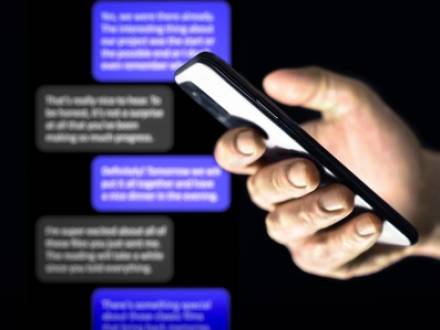 In Florida sex crime investigations, text messages are some of the most commonly used pieces of evidence. They can show who was in contact with whom, what was said, and when. Understanding how this evidence works is one of the most important things you can do if you are under investigation.
Time magazine recently published an online article about how text messages have played a major role in many criminal cases, since they give prosecutors timestamps, written content, and context that spoken words can't provide. If you are under investigation or facing charges in 2026, our Miami sex crimes lawyer can help you understand what evidence is being used and how to fight back.
When Can Text Messages Actually Be Used as Evidence in a Florida Criminal Case?
Text messages can show intent, reveal the nature of a relationship, and in some cases provide direct proof of an alleged offense.
What Happens if You Are Arrested for DUI After a Car Accident?
 Getting arrested for DUI after a car accident is a different situation than a standard DUI stop, and the legal consequences reflect that. Under Florida Statute § 316.193(3), DUI charges become significantly more serious when a crash causes property damage, injury, or death. Ultimately, the more severe the outcome of the crash, the more serious the charge, and the penalties can escalate significantly depending on whether someone was injured or killed.
If you've been arrested after an accident in 2026, a Miami DUI defense lawyer can help you understand what you're facing and start building your defense right away.
How Does a Car Accident Change a DUI Charge in Florida?
A standard first-offense DUI in Florida is a misdemeanor. An accident changes that calculation fast. The moment property damage, injury, or death enters the picture, Florida law treats the case very differently.
Can Self-Defense Be Used in a Florida Domestic Violence Case?
 Self-defense is a legitimate legal defense in Florida domestic violence cases, and it's used more often than many people realize. Being arrested doesn't mean the full story was heard. If you’re facing charges in 2026 and want to tell your side of the story, Stroleny Law: Criminal Defense Attorney can help. Our Miami domestic violence defense lawyer can help you understand what the law allows and build a case around what actually happened.
What Does Florida Law Say About Self-Defense?
Under Florida Statute § 776.012, you can use force against another person when you reasonably believe it's necessary to protect yourself from being hurt. You don't have to wait until you've been hit.
The keyword is "reasonable." Your belief that you were in danger has to be something a reasonable person in the same situation would feel too.
Can You Lose Your Gun Rights After a Drug Conviction in Florida?
 If you have been charged with a drug crime in Miami, FL, you may be worried about your gun rights. A drug conviction can permanently take away your right to own or carry a firearm under Florida law. Knowing what is at stake in 2026 is critical. A Miami, FL criminal defense attorney can help you fight to protect those rights from the start.
Which Drug Convictions Can Cost You Your Gun Rights?
Not every drug charge takes away your gun rights. It depends on whether the charge is a felony or a misdemeanor. A felony is a serious crime that can result in more than one year in prison. A misdemeanor is less serious and is usually punishable by up to one year in jail or a fine.
What Happens to Your Gun Rights After a Felony Drug Conviction?
According to Florida Statute 790.23, anyone convicted of a felony in Florida cannot own, possess, or control a firearm or ammunition. This includes felony drug charges such as trafficking, possession with intent to sell, and distribution.
Revenge Porn and Digital Sex Crimes
 Maybe things ended badly with someone you were with. Maybe you were angry, or hurting, or just not thinking straight. Whatever the circumstances, you shared an image or a video online that you shouldn’t have. Now you are wondering what happens next, whether you could go to jail, and whether anyone can help you.
First, take a breath. You are not the first person to make this kind of mistake, and you do not have to figure this out alone. If you are facing a revenge porn or digital sex crime charge in 2026, you need a Miami criminal defense attorney in your corner right away.
What Is Revenge Porn and Is It Really a Crime in Florida?
Revenge porn means sharing a sexual image or video of someone without their permission, usually to embarrass or hurt them. In Florida, this is absolutely a crime. It does not matter if you took the image yourself or if the other person originally sent it to you. Sharing it without their permission can land you in serious legal trouble.
Can You Get Arrested Just For Being High in Miami?
 If you are worried about whether being high in public can lead to an arrest in Miami in 2026, the answer is more complicated than a simple yes or no. Florida law does not make it a crime to simply be under the influence of drugs in public. However, certain behaviors while intoxicated can definitely get you arrested.
If you’ve been arrested after being high in public, you could be facing anything from possession charges to disorderly intoxication. Whatever the specific charges are, you need a Miami criminal defense attorney who knows how prosecutors think and how to fight criminal charges.
Is Being High Illegal in Florida?
Florida does not have a law that specifically criminalizes being under the influence of drugs in a public place. Unlike drug possession, which is clearly illegal under Florida law, simply being high without having drugs on you is not automatically a crime unless you’re obviously acting high.
Can You Fight a Restraining Order in Miami?
 Being served with a restraining order after accusations of domestic violence can be a shocking experience. These orders can prevent you from going to your own home, seeing your children, or even going to work if your job is near the person who filed the order against you. If you believe the restraining order is unfair or based on false accusations, you are not powerless. You can and should fight it.
Florida law gives you the opportunity to share your side of the story and challenge the restraining order at a hearing. If someone files a restraining order, stay-away order, or no-contact order against you in 2026, our Miami restraining order defense lawyer is here to help.
What Is a Restraining Order in Florida?
In Florida, restraining orders are officially called "protective injunctions." The most common types are injunctions for protection against:
Contact Us
Connect with Us and Take the First Step Toward Justice
To get the legal help you need in your criminal case, reach out to our firm today. We will provide you with a free consultation where our attorney will review your case and advise you of your legal options.
66 W Flagler St., Suite 1005
Miami, FL 33130
P 305-615-1285

Please fill out the form below or call 305-615-1285 to contact us.



From our Miami office, Stroleny Law: Criminal Defense Attorney serves clients across the city, including Allapattah, Brickell, Coconut Grove, Coral Way, the Design District, Downtown Miami, Edgewater, Liberty City, Little Haiti, Little Havana, Overtown, the Upper East Side (MiMo District), and Wynwood. Our reach also extends throughout Miami-Dade County, representing clients in Aventura, Coral Gables, Doral, El Portal, Florida City, Hialeah, Homestead, Key Biscayne, Miami Gardens, Miami Springs, North Miami, North Miami Beach, Opa-locka, Pinecrest, South Miami, Sunny Isles Beach, Sweetwater, and West Miami.
Results listed are not a guarantee or indication of future case results.
© 2026 Stroleny Law: Criminal Defense Attorney
66 W Flagler St., Suite 1005, Miami, FL 33130
305-615-1285